Official Binance Website Binance P2P buy step by step is what anyone without an international card searches before buying crypto, and what they fear …
Binance P2P buy step by step is what anyone without an international card searches before buying crypto, and what they fear most is getting scammed. The idea is simple: you buy directly from another user, and the platform holds the coins in escrow until you confirm delivery. This guide is based on the sources available to us (the explainer video and the platform’s public pages) unless stated otherwise.
What Is Binance P2P and Why Does It Matter for Beginners?
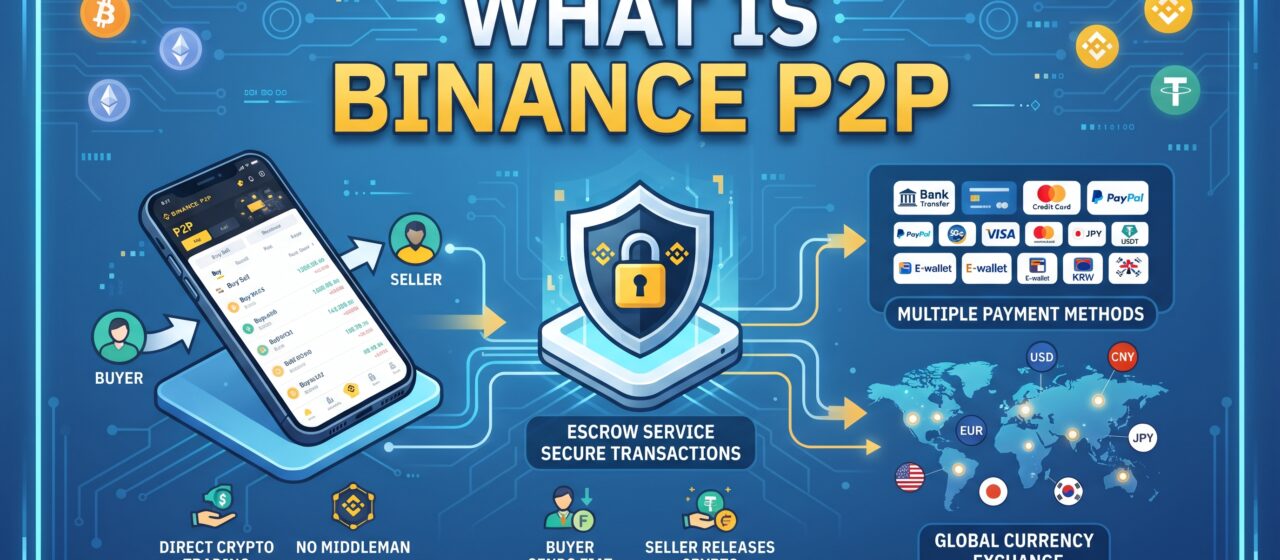
Binance P2P is a service that lets you buy and sell crypto directly with other users, without a central intermediary. The platform acts as escrow: it holds the coins until you confirm you’ve transferred the amount to the seller. This makes it a practical substitute for anyone without an international card.
The problem isn’t the idea — it’s the details. How do you choose a seller? What if they refuse to release the coins? What happens outside escrow? So we start with the steps, then move to the risks.
Step 1: Create and Verify Your Binance Account
Before any P2P purchase, you need a verified account. The source available to us states that KYC is mandatory for P2P buying. That step takes time but is a hard requirement.
What you need before starting
Three things: a fully verified account, funds in the payment method you’ll use (bank transfer, local wallet, or card), and a phone number linked to the account for trade notifications.
After KYC, check that your account allows P2P trades. But some restrictions may apply depending on your country and payment method.
Step 2: Access the P2P Section
After logging in, go to Wallet, then choose P2P from the trading menu. Click Buy, then choose the crypto you want — USDT is the most common starting point.
Choosing a payment method
In the P2P section you can choose your preferred payment method. The source available to us mentions examples: Vodafone Cash, local banks (Banque Misr, CIB, National Bank), Gulf banks (Qatar Bank, Kuwait Bank, Emirates Bank), and credit or debit cards.
Before the trade, confirm the payment method you chose is supported by the seller. Therefore, any mismatch between your method and the seller’s method means the trade gets cancelled.
Step 3: Choose the Right Seller
This is the most important step in the entire process. The source available to us advises checking that the seller’s trust level is above 90% to reduce risk. But ratings alone aren’t enough — also look at completed trades and account age.
How to read seller ratings
A rating of 90% or higher means most of their previous trades succeeded. But note: a new seller with 5 trades at 100% is not the same as a seller with 1,000 trades at 95%. Experience is measured by trade count, not by rating alone.
Step 4: Execute the Purchase
After choosing a seller, the trade begins officially. Click Buy next to their name, enter the amount in your local currency, then open the chat to confirm payment details.
Transfer the amount according to the agreed method. Once the seller confirms receipt, the coins are released and added to your Binance balance.
Google AdSense · 728×90
More from this section
Keep the order number as a reference. Because any future dispute will need that number to contact support.
What If the Seller Refuses to Release the Coins?
This scenario is rare but possible. The seller may claim they never received the amount, or ask for an additional transfer outside the platform. Don’t do it. Transfer only the agreed amount, and use the “Dispute” button on the platform.
Escrow protects your funds until support resolves the dispute. The source available to us states that escrow protects the seller’s funds until payment confirmation — which means the funds are held by the platform, not by the seller. Therefore, refusal to release doesn’t mean your money is lost, but it does mean waiting.
Never transfer any amount outside Binance P2P, even if the seller asks. Any transfer outside escrow isn’t protected.
Common Mistakes That Can Cost You Money
These mistakes repeat with beginners, and some can’t be undone:
Transferring outside P2P. The seller may ask for a direct transfer “to save time” — that means the trade leaves escrow. Mismatched payment details. The sender name on the bank transfer must match your account name. Confirming receipt too early. Don’t click “Received” before you actually see the coins in your wallet.
Binance P2P Buy Video: Watch Before You Start
The video below shows the steps on screen. Watch it before you start, especially the seller selection part.
Quick Comparison: P2P vs. Bank Card
For a beginner in most regions, P2P is usually the better fit. But if your card is supported, the card route is faster and has fewer steps.
What We Know / What We Couldn’t Verify
FAQ
Sources and References
Sources available to us while preparing this guide:
- Binance P2P buy explainer video — secondary source (video).
- Official Binance website — primary source (official page).
- Binance Support Center — to verify P2P procedures and disputes.
All information published on this website is presented in good faith and for general informational purposes only. Any action, decision, or step taken by the reader based on this information is solely and individually the reader’s own responsibility, and the website assumes no legal liability for such decisions. Please review the laws and regulations applicable in your own country.
How this article was prepared: This article was drafted with the help of AI tools and reviewed editorially by Tech Zone before publication. Information about Binance P2P procedures is based on the sources listed above and was not personally tested in the 2026 version.
Tech Zone Verdict: Should You Start With P2P?
If you don’t have an international card and want to buy crypto with relative safety, P2P on Binance is a practical choice — provided you pick a seller with a high rating and a solid trade count, always use escrow, and refuse any off-platform transfer. If your card is supported, the card route is faster and has fewer steps.
Your next practical step: pick a seller with a 90%+ rating and a large trade count, start with a small amount, and read the trade details twice before clicking “Buy.”